
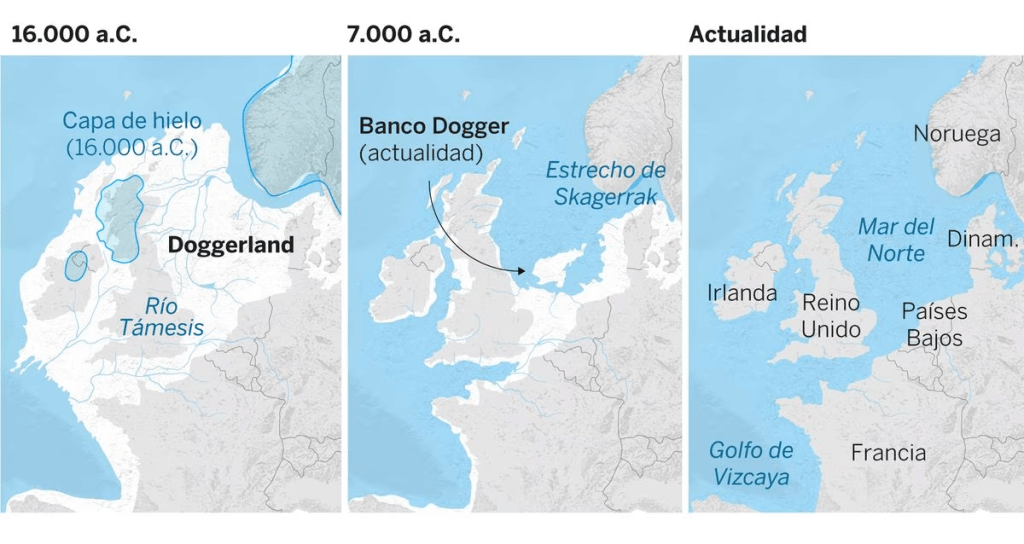
At the end of the last ice age, Britain formed the northwest corner of an icy continent. Warming climate exposed a vast continental shelf for humans to inhabit.
Further warming and rising seas gradually flooded low-lying lands. Some 8,200 years ago, a catastrophic release of water from a North American glacial lake and a tsunami from a submarine landslide off Norway inundated whatever remained of Doggerland.
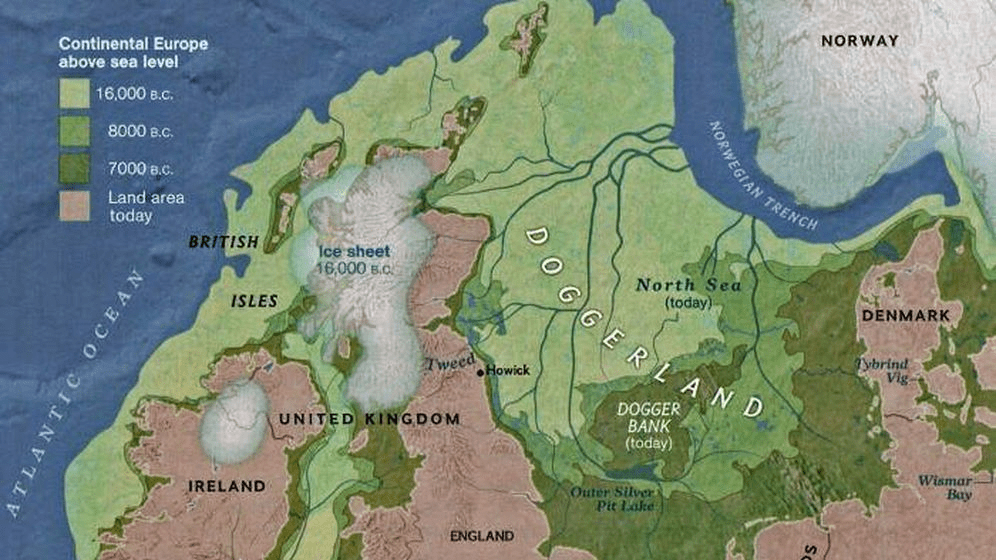
Things aren’t always what they seem on the surface. Looking at the area between mainland Europe and the eastern coast of Great Britain, you probably wouldn’t guess it had been anything other than a great expanse of ocean water. But roughly 12,000 years ago, as the last major ice age was reaching its end, the area was very different. Instead of the North Sea, the area was a series of gently sloping hills, marshland, heavily wooded valleys, and swampy lagoons: Doggerland.
Mesolithic people populated Doggerland. Archaeologists and anthropologists say the Doggerlanders were hunter-gatherers who migrated with the seasons, fishing, hunting, and gathering food such as hazelnuts and berries.
Over time, the Doggerlanders were slowly flooded out of their seasonal hunting grounds. Water previously locked away in glaciers and ice sheets began to melt, drowning Doggerland. Around 6,000 years ago, the Mesolithic people were forced onto higher ground, including in what is today Britain and the Netherlands.
Evidence of Doggerlanders’ nomadic presence can be found embedded in the seafloor, where modern fishermen often find ancient bones and tools that date to about 9,000 years ago.
These artifacts brought Doggerland’s submerged history to the attention of British and Dutch archaeologists and paleontologists.

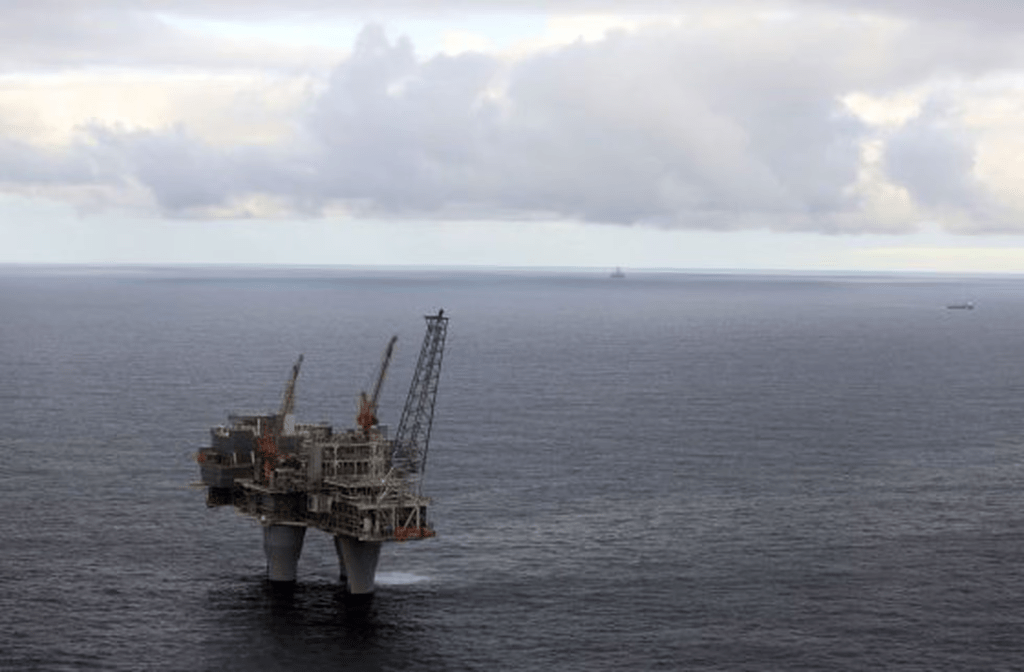
Using sophisticated seismic survey data acquired mainly by oil companies drilling in the North Sea, the scientists have been able to reconstruct a digital model of nearly 46,620 square kilometers (18,000 square miles) of what Doggerland looked like before it was flooded.

Those studying the Doggerland area are finding that the climate change faced by Mesolithic people is analogous to our own.
Mesolithic peoples were forced out of Doggerland by rising water that engulfed their low-lying settlements.
Climate scientists say that a similar situation could affect the billions of people who live within 60 kilometers (37 miles) of a shoreline today, if polar ice caps continue to melt at an accelerated pace.
The story of the Mesolithic people and their home of Doggerland are cautionary tales for the consequences of a rapidly rising sea level.
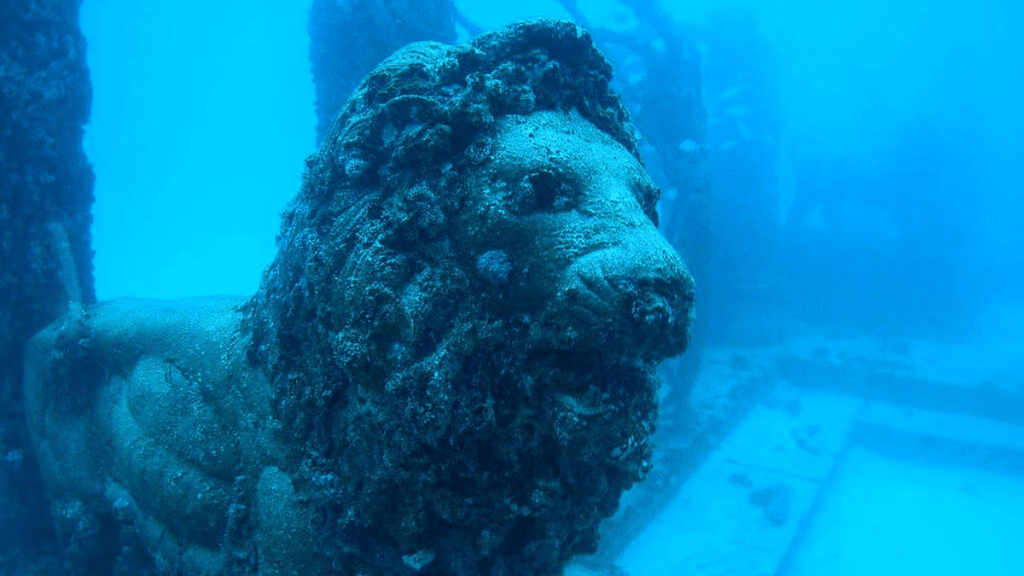
Glacial melt forced the Mesolithic people out of their homes and now Doggerland, like the fabled Atlantis, is just a sunken and mostly forgotten Stone Age culture, its only evidence being decayed artifacts and fossils of its people.
https://education.nationalgeographic.org/resource/doggerland/
 El blog de Ila Basmati